Jeremiah Brent | Vermont
Ski House: Conscious Select × Jeremiah Brent
Jeremiah Brent has built a practice around a deceptively simple idea: that a home should hold the people inside it. Not impress them, not perform for them — hold them. His work spans estates in Montecito and Manhattan, a Hollywood headquarters, a Park Avenue penthouse, and now a family retreat tucked into the slopes of southern Vermont. Across all of it, the throughline is restraint — the discipline to leave things out, the confidence to let materials and light do the work that decoration usually does.
He is AD100 listed, Elle Decor A-List 2025, and recently joined the Fab Five on Queer Eye. None of that is why Conscious Select features him. He is here because the Vermont Ski House is one of the clearest demonstrations in recent residential design of what it means to work consciously within an existing structure rather than against it.



The Project
The house was once a ski school and television set — built in the 2010s but, by the time Brent arrived, saddled with knotty pine, orange tones, and the commercial details of an institutional space: exit signs, fire alarms, plaid foam panels duct-taped to the walls. The challenge was not to build something new but to strip back what had accumulated and find what the structure actually was underneath.
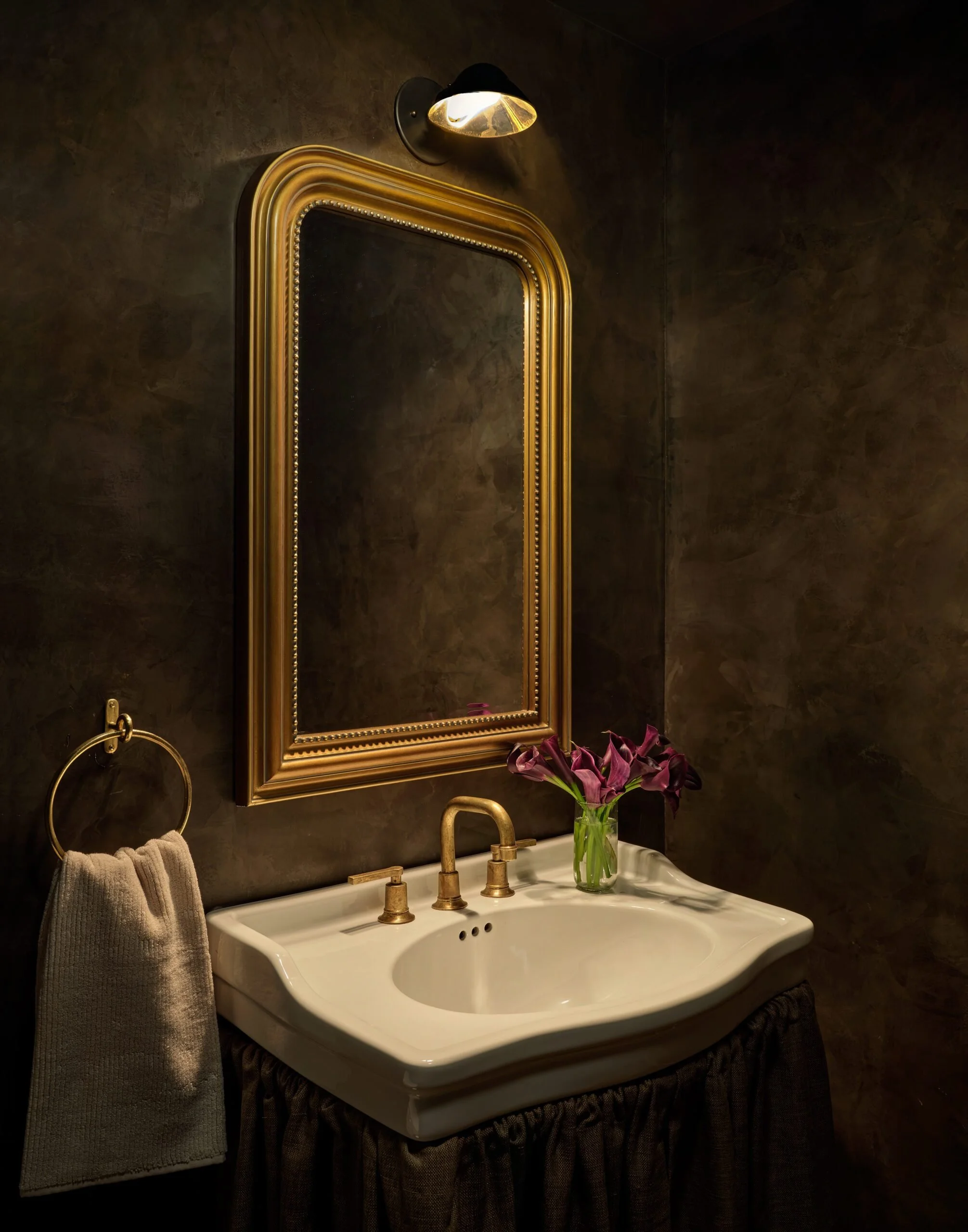
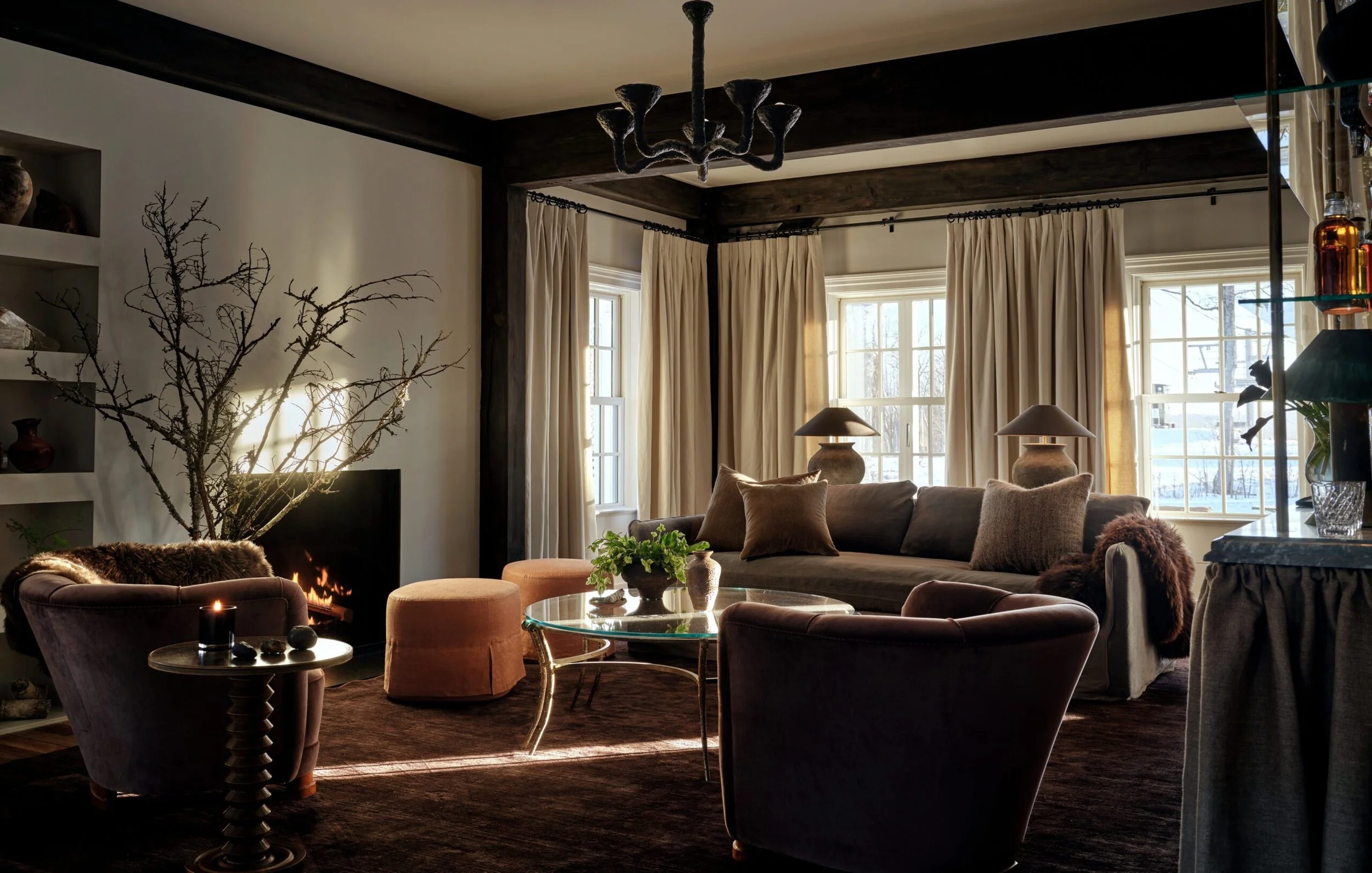
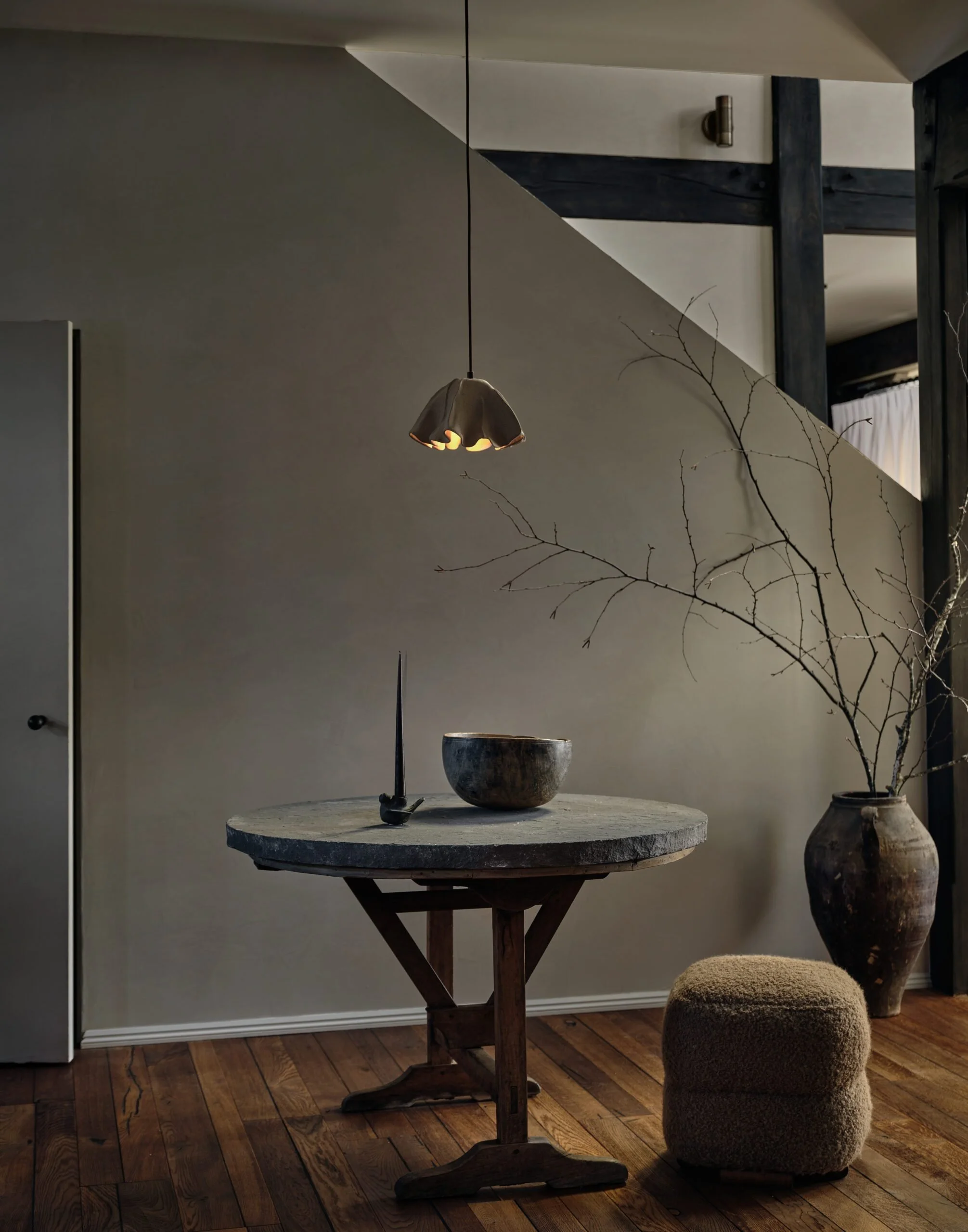
Brent's approach began with the original floors, which inspired every subsequent decision — from the plaster and stone to the wood stains and accessories. All beams and millwork were restrained in matte charcoal, grounding the architecture in a quiet authority that the previous interior had never allowed. Walls were covered in decorative hand-troweled plaster, diffusing light with the kind of softness that paint cannot achieve. The existing tiles in the mudroom were reused and reconfigured rather than replaced — a small decision that carries a clear philosophy.
Materials were chosen for how they age rather than how they arrive. Sherpa wool, vintage leather, linen, aged verdigris, and raw stone layer together into an interior that feels collected across time rather than designed in one moment. The result is a home that asks nothing of its inhabitants except presence — a rustic refinement that fulfills, as Brent put it, the family's request for a "rustic yet refined getaway."


CS Design Values
Adaptive Reuse. The project began with what already existed — existing structure preserved, original floors honoured, tiles reused and reconfigured. Nothing demolished that could be transformed.
Material Honesty. Every surface was chosen for its capacity to age gracefully and improve with use. Plaster, raw stone, charcoal-stained timber, and vintage leather — materials that carry the weight of time rather than resist it.


Why It's Consciously Selected
The Vermont Ski House does not announce its intentions. It simply shows what happens when a designer resists the reflex to start over and chooses instead to listen to what is already there. The result is a home that feels as though it has always been this — settled, assured, and entirely of its place.